
Surgery for esophageal cancer can involve removing the entire organ or only a part of it, and in some cases, it may also include the removal of other organs affected by the disease, such as the stomach or lymph nodes.
The most common surgical intervention for treating esophageal cancer is called open esophagectomy, in which the affected part of the esophagus is removed, and then the healthy side is connected to the stomach so that the patient can swallow normally. During this procedure, incisions can be made in the abdomen and chest or abdomen and neck. In some cases, incisions may be made in all three of these areas, depending on the position of the cancer.
If the affected area is small, a minimally invasive esophagectomy can be performed instead of an open esophagectomy. This procedure is done through small incisions instead of one or two large incisions. During this type of surgical intervention, a laparoscope is used to remove the diseased esophagus and connect the healthy part to the stomach.
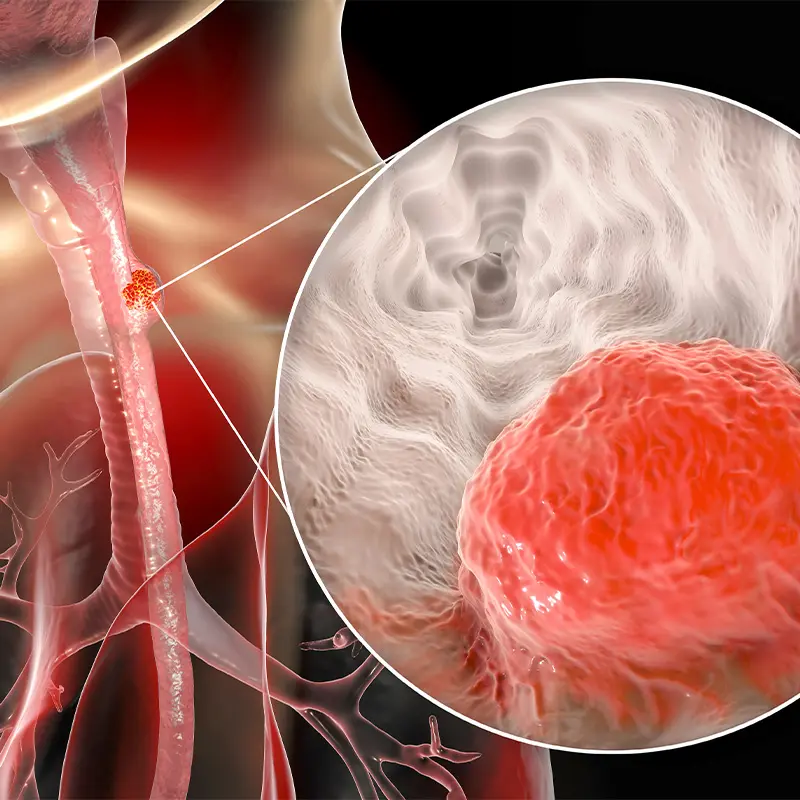
Additionally, endoscopic mucosal resection is a minimally invasive procedure that can be used to remove early-stage cancer. In some cases, it can be used during the diagnostic process.
When evaluating a patient to determine the type of surgical intervention needed, factors such as:
Homepage » Intervenții chirurgicale » Esophageal Cancer Surgery